
Indian benchmark stock indices Sensex and Nifty rebounded nearly 1 per cent, snapping a three-day decline, driven by rallies in Reliance Industries and Sun Pharma, alongside positive global market trends and easing geopolitical tensions.

Sun Pharma and ONGC emerging as biggest gainers

The diagnostics sector is projected to significantly outperform other healthcare segments like pharmaceuticals and hospitals in Q4FY26, driven by increasing volumes, stable realisations, and a domestic focus that insulates it from geopolitical risks.

'Given that India underperformed emerging markets by 28 per cent in 2025, the worst performance in over 30 years, the timing of the sharp STT hike could have been better.'

'The bigger unknown remains global geopolitics, which is inherently unpredictable, including developments in our neighbourhood.' 'Another concern is the increasing tilt of government finances towards welfare subsidies, especially at the state level.' 'This could constrain capital expenditure, which is critical for long-term growth.'

Hindustan Unilever (HUL) exceeded consensus estimates in Q4FY26, driven by lower overheads and 6 per cent consolidated volume growth. However, the company anticipates further price hikes to counter an expected 8-10 per cent material cost inflation, while maintaining a mid-term margin guidance of 22.5-23.5 per cent.

HDFC and ITC walk away with largest share of gains

Indian equities on Dalal Street saw volatility as global market trends and fresh tariff concerns linked to Donald Trump impacted investor sentiment. Track Sensex, Nifty50 movement and key market drivers for Feb 24, 2026.

Kiran Mazumdar-Shaw names niece Claire Mazumdar as successor at Biocon. Explore the leadership transition, strategy, and future plans.

Global risks include a potential delay in the US-India trade agreement, the possibility of a sharp correction in US equity markets, and renewed geopolitical tensions.

ONGC and Infosys see erosion in their valuations

Small- and midcap stocks have delivered their biggest monthly rally in 12 years, but rising oil prices and global tensions could make the road ahead volatile.

TCS ruled the domestic market cap chart in ranking, followed by RIL, HDFC Bank, ITC, Infosys, HDFC, CIL, Sun Pharma, HUL and ONGC
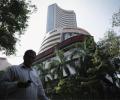
HDFC worst hit with Rs 9,177 cr erosion; Sun Pharma only firm to have come out a gainer

Foreign portfolio investors have started 2026 on a cautious note, extending their selling streak from last year by withdrawing Rs 7,608 crore ($846 million) from Indian equities in the first two trading sessions of January. The withdrawal of funds followed the largest outflow of Rs 1.66 lakh crore ($18.9 billion) recorded in 2025, triggered by volatile currency movements, global trade tensions and concerns over potential US tariffs, and stretched market valuations.
Analysts are increasingly optimistic about India's capital markets, with HDFC AMC, CAMS, and KFin Technologies identified as top investment picks. This optimism stems from a structural shift in household savings towards financial instruments and an expected multi-year earnings expansion for market infrastructure providers and asset management companies.

Market valuation of TCS surged by Rs 26,677.87 crore.

In the top-10 ranking list of most valued companies, TCS stood at number one position followed by RIL, HDFC Bank, ITC, Infosys, HDFC, ONGC, CIL, SBI and HUL

Sun Pharmaceutical Industries' Executive Chairman Dilip Shanghvi described the USD 11.75 billion acquisition of US-based Organon & Co as both a "happy" and "bit anxious" moment, acknowledging the significant debt required to fund the large transaction.

There are vexing questions around the disconnect between Nifty returns and portfolio returns, between economic growth and earnings growth, and finally, between earnings growth and market returns, points out Debashis Basu.

Foreign Portfolio Investors (FPIs) remained in a selling mode in January, withdrawing nearly Rs 36,000 crore (about $3.97 billion) as global uncertainties persisted. Meanwhile, a higher securities transaction tax (STT) proposed in the Union Budget may weigh on overseas investor participation in the near future.

Over the past week, the benchmark BSE Sensex gained 646.12 points to settle at 27,887.90.

'The first time India has seen two consecutive blockbuster IPO years.'
Reliance Industries Limited (RIL) faced a challenging fourth quarter, with its energy business experiencing significant headwinds, leading to overall muted results and prompting analysts to adjust their outlook, even as consumer segments like Jio and retail demonstrated robust growth.

Domestic institutional investors, on the other hand, made a net investment of Rs 1.13 trillion during this period.

India's privatisation push, once projected as a cornerstone of economic reform, has suffered another setback, with the Centre set to call off the IDBI Bank stake sale, highlighting the political and structural constraints shaping the country's disinvestment policy, experts say.
'The next phase of India's IPO cycle will be defined by quality, pricing discipline and investor selectivity.'

With duties at 15%, GST at 3%, and making charges running as high as 20% -- the gap between a smart purchase and a careless one can easily be Rs 30,000 to Rs 50,000 on every Rs 1 lakh invested. And most of that gap is entirely avoidable. Ramalingam Kalirajan explains the math.

Reliance Industries emerges biggest gainer

Global brokerage Bernstein has issued a cautionary note, stating that India risks 'under-delivering on its potential' unless it addresses key policy bottlenecks and structural risks, including employment challenges from AI, limited manufacturing gains, and rising welfare spending.

Despite recent share price dips, Bharti Airtel is strategically positioned for growth, driven by investments in data centres via Nxtra, a potential tariff hike, and strong performance in Africa, alongside efforts to deleverage and expand its subscriber base in underpenetrated rural markets.
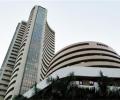
However, TCS, ITC, Infosys, HDFC Bank, ICICI Bank and Sun Pharma added Rs 27k cr in m-cap

Retail investors' equity portfolios have significantly underperformed benchmark indices over the past 16 to 18 months.

Only 2.5 per cent of the equity in Jio Platforms will be offloaded through the OFS route -- meant for secondary share sale.

India's market landscape is undergoing significant shifts, with bank-backed brokerages potentially regaining dominance over discount platforms due to regulatory changes and increased taxes, while the IPO pipeline faces a slowdown amid heightened global volatility.

In November, six primary market issuances accounted for more than 13,000 crore of net equity investments by MFs.

10 stocks from the Nifty 200 index that offer good growth potential and scope to deliver decent returns from current levels, based on brokerage estimates.

Foreign portfolio investors (FPIs) withdrew a substantial amount from Indian equities in the first half of March, driven by geopolitical tensions, rupee depreciation, and concerns about crude oil prices.

The National Stock Exchange (NSE) will launch Dated Brent Crude Oil (Platts) futures on April 13, offering a new hedging tool for market participants.

The market capitalisation of TCS plunged by Rs 18,911.52 crore (Rs 189.11 billion) to Rs 5,24,772.61 crore (Rs 5,247.72 billion).
